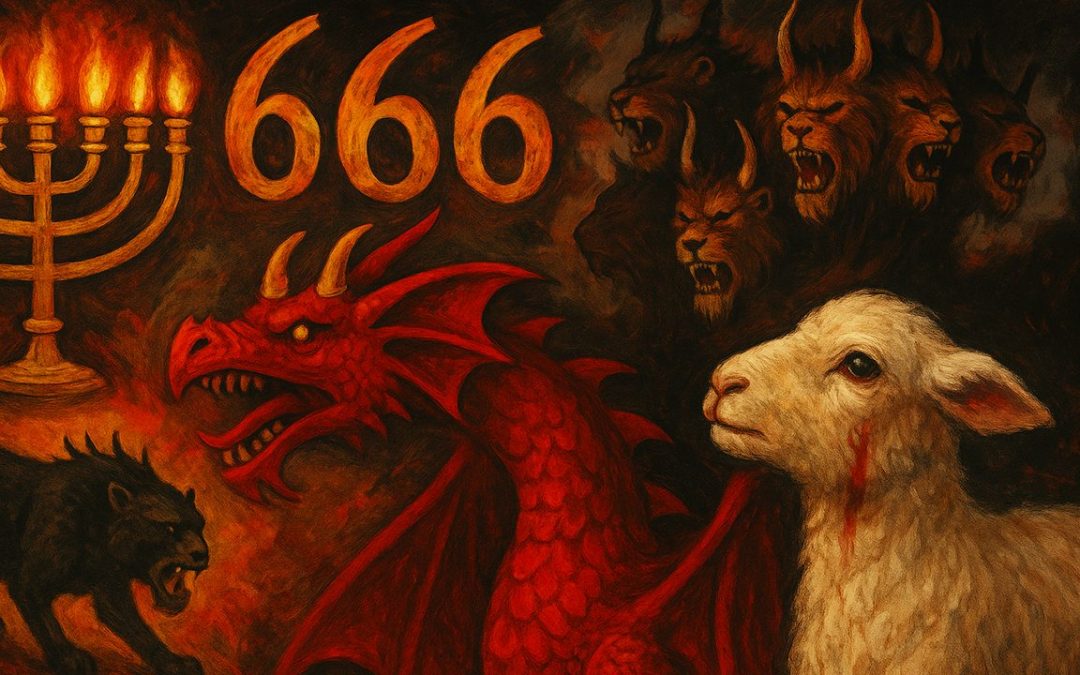
I still remember the first time I approached the Book of Revelation without any grounding in Torah. It felt like stepping into a movie halfway through with the subtitles turned off — crazy images everywhere, but no context to anchor them. From beasts and bowls to the mysterious “triple six,” John’s visions seemed far beyond anything I could ever hope to understand.
Part of the frustration I experienced was that, in many Western churches, Revelation is rarely taught. Some pastors even discourage people from reading it, despite the book itself promising a blessing to those who do. Add to that a widespread neglect of the Old Testament in many churches—especially the Tanakh—and many believers are left trying to interpret the most symbol-rich book of the New Testament with half the library missing.
End-Time Curiosity With Old-Testament Amnesia
Trying to grasp Revelation without the Prophets and the Writings is like attempting to run a race blindfolded. So it’s no surprise that so many of us feel spiritually disoriented.
Contemplating the “end times” in a world that feels increasingly unstable has become almost unavoidable. With world-wide tensions rising and cultural norms collapsing, more people are asking what Scripture says about the times we’re living in. The Book of Revelation speaks directly into moments like this, but only when we read it the way John intended—through the lens of the Old Testament.
Understanding how to read this book changes everything—because Revelation was never meant to confuse believers, but to steady and strengthen us. With that in mind, here are seven things most readers miss when studying this awe-inspiring book.
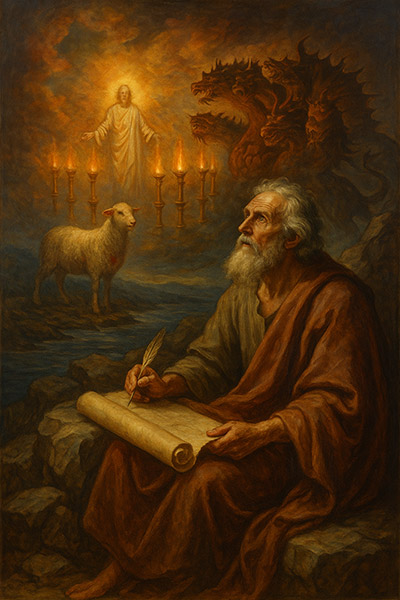
Apostle John on Patmos
7 Insights That Bring Clarity to the Book of Revelation
1. Revelation is meant to inspire—not terrify.
John’s visions were given to strengthen the faithful, encourage endurance, and remind believers that Yeshua reigns, even when the world looks chaotic. It was written to encourage suffering believers that, despite the power of Rome, YHWH reigns and through Yeshua (the Lamb slain, and now resurrected) victory has already been won. It remains a description of the ongoing struggle between Eloah’s kingdom and forces of darkness that oppose every generation, with a call to faithfulness.
John reveals heavenly realities behind earthly events. In doing so he…
Emphasizes that YHWH still reigns over the nations
Powers that persecute His people (Rome/demonic spirits) are temporary
The promises of the Prophets are being fulfilled through Yeshua
Before diving into John’s apocalyptic book, it is essential to clear up a common misunderstanding about the word apocalypse. In Greek, the term simply means “unveiling” or “revealing”—a pulling back of the curtain so something hidden can be seen. But in modern Western culture, the word has been twisted to imply chaos, catastrophe, and end-of-the-world destruction. If we carry that distorted definition into Revelation, we start off with the wrong expectations.
2. Revelation shows history repeating until its final, glorious conclusion.
Patterns of rebellion, judgment, and restoration echo throughout Scripture and culminate in the triumph of the Lamb and those who belong to Him. Since many of us reflexively try to map out an end-times timeline when studying John’s writings, it helps to pause and consider how the biblical view of time differs from the Greek one.
Western perception of time is linear – going from the past into the present and out to the future. There is a ‘beginning’, an ‘end’, then Eternity. However, the Hebrew concept of time is cyclical.
In Hebraic thought, the cycles, rhythms and recurring historical patterns that move forward are more like a spiral traveling upward instead of a straight line.
According to author and Bible scholar Eitan Bar1:
This can be seen in the weekly rhythm of Shabbat, the annual cycle of feasts and festivals, and in prophetic literature where past events echo into the future. Events repeat – not identically, but thematically – with each cycle deepening in meaning and pointing toward ultimate fulfillment. Redemption, exile, return judgment, and renewal are themes that happen again and again throughout Scripture. […] This cyclical understanding is crucial when reading apocalyptic or prophetic texts like Revelation, because these texts are rarely linear timelines by symbolic portrayals of repeated patterns – cycles of human failure, diving intervention, and ultimate restoration.
3. Revelation reveals divine justice in the heavenly courtroom.
Much of Revelation is legal language—books opened, charges read, witnesses summoned—showing YHWH as the righteous Judge who sets all things right. Revelation’s structure aligns with the Covenant Lawsuit pattern also known as the rib (רִיב) pattern. The Hebrew word rib is associated with two Strong’s numbers: H7378 and H7379 and can mean dispute, accusation, legal case, quarrel, bring a charge or accuse. Both come from the same root and are used in passages where YHWH ‘brings a case’ or ‘contends’ with His people. This is a major theme in the Prophets.
Here is the Divine Lawsuit Structure:
Summons of Witnesses – Yah summons creation or nations to witness the covenant breach
Statement of the Plaintiff (YHWH) -Yah declares His grievance or lawsuit against Iisrael/Yehudah
Review of Covenant History – Yah rehearses his faithful acts and Israel’s rebellion (evidence phase)
Indictment (Charges brought) – Specific sins are named (idolatry, injustice, false worship, covenant unfaithfulness, etc)
Evidence and Witnesses Presented – The heavens, earth, or prophets testify to Yah’s charges
The Verdict Rendered – Yah declares the punishment or consequence
An Offer of Repentance and Restoration – Lawsuit ends with a call to repent and a promise of mercy
This rib structure appears in Hosea 4:1, Isaiah 1:4, Micah 6:3-5, Deuteronomy 32:1, Hosea 14:1, Micah 7:18-20, etc. Reread Revelation chapters 1-6 with this in mind and the book will already begin to take on new meaning.
4. Revelation reminds us to watch the signs of the times, not predict dates.
Revelation reminds believers to stay awake and discerning, but it strongly resists every attempt to force prophetic events into specific dates or rigid timelines. Much of the confusion surrounding this book comes from the habit of ‘date-setting’—people trying to crack an end-times “code” they imagine John embedded in the text.
It’s important to distinguish between date setting and speculative forecasting. Date setting claims or implies an exact time for a prophetic event—such as declaring, “Yeshua will return in 2030.” This is spiritually dangerous, as it directly conflicts with Yeshua’s own words that “no one knows the day or hour” (Matthew 24:36; Mark 13:32; Acts 1:7).
Speculative forecasting, on the other hand, is different. It involves observing prophetic patterns, world-wide trends, and Scriptural signs in order to discern the season or general nearness of events. Scripture not only allows this—it encourages it.
When ‘these things’ begin to happen, Yeshua tells us to “look up, for our redemption is drawing near”. (Luke 21:28) Knowing the exact timing is under the Father’s purview.
In other words, noticing blatant deception, moral collapse, and ethnic tension is not disobedience; it’s the kind of watchfulness Yeshua commanded.
5. Symbolism drives the message.
While some elements are literal, Revelation communicates truth primarily through imagery, metaphors, and symbolic patterns drawn from the rest of Scripture. In the argument for symbolism versus literalism, there are two camps: evangelicals, and those who embrace symbolism from a Second Temple Period2 Hebrew mindset.
Bar states:
Jewish apocalyptic literature is highly abstract–forcing nuanced interpretations that go beyond the literal. It makes apocalyptic literature especially powerful for conveying deep Spiritual truths. At the same time, it poses significant interpretative challenges, particularly for the average Western mindset, which tends to favor a straightforward, linear, analytical thinking and may be less familiar with the symbolic richness of the apocalyptic genre.
So why would John choose to use ‘confusing’ language?
To confuse the devil.
To ensure that he could effectively deliver his letter to the assemblies ‘under the radar’ of Roman imperial persecutors.
Symbolic language is often viewed as superior to literal expression because it communicates on multiple levels at once.3
6. The Old Testament holds the interpretive keys.
Nearly every symbol in Revelation echoes Torah, the Prophets, and the Writings. Without the Tanakh, most of the imagery remains mysterious. John’s visions are saturated with imagery from the Prophets and the Psalms, not replacing their message but advancing it into its fuller, climactic expression.
In his book The Old Testament in Revelation, Dr. Michael Heiser repeatedly states that Revelation is filled with Old Testament echoes, and we can’t make sense of the book unless we recognize them. He insisted that we pay attention to where those allusions come from, what they meant originally, and how John reworks them in his visions. He also warned that John’s use of Scripture is more complicated than simply checking cross-references. Even with hundreds of Old Testament links, none of them are straightforward, word-for-word quotes.
7. Revelation uses covenant-courtroom language from start to finish.
From scrolls and seals to bowls and verdicts, the book follows the pattern of ancient covenant lawsuits—Heaven’s legal proceedings brought into full view.
The entire book unfolds like a heavenly legal proceeding put on full display. John shows us the courtroom itself—complete with the throne at the center, the twenty-four elders seated around it like a council, the living creatures acting as witnesses, books opened, charges leveled, verdicts rendered, and judgments executed. Far from random symbolism, these elements reflect the ancient covenant-lawsuit pattern woven throughout the Torah and the Prophets.
These are the “courtroom visuals” Revelation uses:
The throne — the seat of the Judge (Rev. 4:2)
Twenty-four elders — a heavenly council (Rev. 4:4)
Living creatures — witnesses to His judgments (Rev. 4:6–8)
Books opened — legal records/testimony (Rev. 20:12)
Scroll with seals — a formal legal document (Rev. 5:1)
Accusations against assemblies — charges brought, evidence presented (Rev. 2–3)
Angelic proclamations — announcements of verdicts (Rev. 14:6–7)
Bowls of wrath — the execution of judgment (Rev. 16)
As we step back from these seven guiding principles, one truth becomes unmistakable: Daniel is the backbone of Revelation. John’s visions build directly on Daniel’s prophetic framework—its beasts, kingdoms, heavenly court scenes, and cycles of human rebellion and divine justice. Without Daniel’s foundation, much of Revelation’s imagery hangs in midair; with Daniel in place, the symbolism becomes anchored, coherent, and unmistakably rooted in the story YHWH has been telling all along.
But even with these connections, we must remember that Revelation was never intended as a formula for calculating the timing of the “end,” the exact moment of the resurrection, or any so-called rapture scenario. Scripture consistently resists attempts to pin prophetic events to dates or timetables. Instead, it calls us to readiness, faithfulness, discernment, and hope.
Revelation isn’t a code to crack—it’s a call to covenant loyalty rooted in the same prophetic tradition that shaped Daniel. It reveals YHWH’s sovereignty, the victory of the Lamb, and the assurance that no matter how chaotic the world becomes, His purposes are unfolding with perfect precision. When we read Revelation with the Torah, the Prophets, and Daniel as our foundation, we find not speculation—but strength. Not fear—but clarity. Not panic—but perseverance.
2 The Second Temple Period refers to the era in Jewish history between the rebuilding of the Jerusalem Temple after the Babylonian exile and its destruction by Rome. This was a span of about 586 years. Revelation, in particular, is deeply influenced by Second Temple imagery, symbolism, and worldview.
3 Symbolic language is often seen as more powerful than literal expression because it conveys meaning on multiple levels at the same time and can communicate effectively across different cultures and languages, though its full meaning still depends on biblical context.
This article includes Amazon (book) affiliate links. If you choose to purchase through them, GWDF may receive a small commission that helps support this ministry—at no extra cost to you.
This article is a Guest Post from Sarah of The Extra Biblical Librarian Substack, which is an excellent resource for those looking to dive deeper into the hidden treasures of the Scriptures. You will find more information about Sarah’s ministry at the end of this article.
What Are the Dead Sea Scrolls?
Along the eastern side of the Dead Sea lies a desert area known as Qumran. Between 200 B.C. and 100 A.D., Qumran was home to a Jewish community. They called themselves The Community and Followers of the Way.
Traditionally, this Community has been associated with a Jewish sect called the Essenes, although some scholars object to this connection. Some suspect the Qumran Community to be related to the Messianic followers of the Way in the Book of Acts. (Acts 9:2, 19:9, 19:23, 22:4, 24:14, and 24:22)
The Qumran Community claimed to be descendants of the Zadokite priests. We can read about the Zadokite priests in the Book of Ezekiel, chapters 40, 43, 44, and 48. In Ezekiel, YHWH called the Zadokites His servants and instituted them as judges and teachers in Israel.
The Community kept a vast library of documents. Around 70 A.D., the Romans attacked Qumran, and the Community disappeared from history. Before this, they hid their documents in Qumran’s caves.
In 1947, these caves were discovered along with the hidden library. Around 53 caves have been found, eleven holding ancient writings. This library became known as the Dead Sea Scrolls.
The Dead Sea Scrolls are a gift to the end-days generation. In this post, I will share significant study topics covered in the Dead Sea Scrolls.
The Torah
The Qumran Community possessed many copies of the first five books of the Bible. They also wrote several additional documents expounding and interpreting Torah passages. These documents emphasize ritual purification, how to keep the weekly Sabbath, YHWH’s appointed times, and how to best maintain community order.
Heaven
The Qumran Community wanted to better understand Heaven, as it was the place of Elohim’s throne. Their writings are full of angelic revelation and heavenly descriptions.
I used to think of Heaven as an abstract dimension, outside of time and mainly unaffected by what happened on Earth. However, after spending time in Qumran’s library, I have developed a clearer concept of what Heaven is and the roles of angels.
Heaven is just as concrete as Earth. It is not outside of time, as it is also a product of the first day of creation. What happens in Heaven affects what happens on Earth. What happens on Earth also affects what happens in Heaven. They are very much connected. Even though most of us are not usually aware of it, angelic influence plays an important role in how the world functions.
The Priesthood and Temple
In their writings, the Community continually expressed their passion for the truthful priesthood. They fervently waited for the time when the Temple would be restored to righteous leadership.
The Qumran documents The New Jerusalem and The Temple Scroll give detailed descriptions of a future Jerusalem and Temple. This future Temple resembles those in Ezekiel and Revelation, but there are some differences.
The Zadok Priestly Calendar
Another major theme in the Dead Sea Scrolls is how to track time. The correct calendar is debated today among believers trying to observe YHWH’s appointed times. The Qumran Community believed that YHWH and the angels kept a specific calendar in Heaven.
Many writings from Qumran explain this calendar. This detailed calendar is perhaps the most relevant information that the Qumran Community preserved for us!
End Days Prophecy
“He decreed an age of wrath for the people who did not know Him, and He established appointed times of goodwill for those who search His commandments and walk in the perfection of way. And He revealed hidden things to their eyes, and opened their ears so that they might hear deep (secrets) and understand all future things before they befall them. Listen now, all you who know righteousness.”
The Dead Sea Scrolls 4Q268, Damascus Document manuscripts from Cave 4, Fragment 1, Lines 5-8
“You will understand the end of the ages and you will gaze at ancient things to know.”
The Dead Sea Scrolls 4Q298, The Master’s Exhortation to the Sons of Dawn, Column 3, Lines 9-10
The Qumran Community cared a lot about prophecy, particularly as it related to the End Days. They recorded prophetic revelations and also wrote many commentaries on the Old Testament prophetic books.
Learn More
The content in this article is excerpted from my full teaching, The Dead Sea Scrolls: A Gift to the End Days Generation. If you’d like to explore the complete study—including background on the community who preserved the scrolls and their prophetic relevance for the End Days generation—you can find the full version available on Payhip, a digital publishing platform where the complete document is offered for a small $5 download fee. Here is thelink.
For your first read, I suggest the Temple Scroll (similar to the Book of Leviticus) or The Thanksgiving Psalms (similar to the Book of Psalms).
To learn more about extra-biblical books, visit the Extra Biblical Librarianon Substack. This is a great place to interact with others who are interested in extra-biblical writings, ask questions, and connect with me personally.
A Song of Ascents. Of David. Behold, how good and how pleasant it is for brothers to dwell together in unity! It is like the precious oil upon the head, coming down upon the beard — Aaron’s beard — coming down on the collar of his robes. It is like the dew of Hermon, coing down upon the mountains of zion. For there Adonai commanded the blessing — life forevermore!Psalm 133:1-3 TLV
Though several weeks have gone by, I still look back at the Gospel Worth Dying For/Prophecy Vine Sukkot 2025 with such joy. As it has been for us the past three years, it was a wonderful time of fellowship, learning, and being out in Yah’s creation together. We’ve made such precious friends that feel like family. When we get together each year to celebrate this Great Feast on the creator’s calendar, it’s like a big reunion. It is truly a picture of what it will be like in the Kingdom — brothers and sisters dwelling together in unity while learning together, worshipping together, and sharing life together.
GWDF/PV Sukkot 2025 Family Photo
But in all honesty, I was not looking forward to Sukkot earlier this year.
With all of the strife and contention, arguments and judgment that we see on the online Torah community, my heart has been feeling a bit jaded. It seems that everybody has an opinion about something, and everybody thinks their opinion is right. Scripture can be interpreted 50 different ways, and rather than adopting the Hebrew mentality of truth unfolding, we’ve fallen into the Greek/western mentality of the need to be right, instead of seeing this walk of faith as our own unique journey: our of Egypt and into the Promised Land.
There are many contentions out there as to whether or not this or that part of the law is the most important. But thankfully, our Messiah showed us:
“But the Pharisees, when they heard that Yeshua had silenced the Sadducees, gathered together in one place. And testing Him, one of them, a lawyer, asked, “Teacher, which is thegreatest commandment in the Torah?” And He said to him, “‘You shall love Adonai your Godwith all your heart, and with all your soul, and with all your mind.’ This is the first andgreatest commandment. And the second is like it, ‘You shall love your neighbor as yourself.’ The entire Torah and the Prophets hang on these two commandments.””
Matthew 22:34-40 TLV
I like to think of those first two Commandments, as the coat rack, or pegs in the wall on which to hang everything else. Whether we focus on the calendar, clean eating, or any other part of Yah’s righteous instructions, they will not hold up if they are not hung on those first twoCommandments: love our Heavenly Father, and love his children.
In another version of this story, the lawyer asks Messiah, ”and who is my neighbor?”
“But wanting to vindicate himself, he said to Yeshua, “Then who is my neighbor?” Yeshua replied, “A certain man was going down from Jerusalem to Jericho. He was attacked by robbers, who stripped him and beat him. Then they left, abandoning him as half dead. And by chance, a kohen was going down that road; but when he saw the man, he passed by on the opposite side. Likewise a Levite also, when he came to the place and saw him, passed by on the opposite side. But a Samaritan who was traveling came upon him; and when he noticed the man, he felt compassion. He went up to him and bandaged his wounds, pouring on oliveoil and wine. Then setting him on his own animal, he brought him to a lodge for travelers and took care of him. The next day he took out two denarii and gave them to the innkeeper, saying, ‘Take care of him. And whatever else you spend, upon my return I will repay you myself.’ Which of these three seems to you a neighbor to the one attacked by robbers?” And he said, “The one who showed mercy to him.” Then Yeshua said to him, “Go, and you do the same.””
Luke 10:29-37 TLV
I know many of us have heard the story often, but it’s worth it to have another look. Both the Levi and the Kohen, who knew the law, acted upon it, and we’re esteemed highly in Israel, did not stop to help the man. Some say that perhaps they had good reasons, not wanting to become unclean. But we see that our Messiah was willing to touch the “untouchable “ and the “unclean“ to show them the love and compassion of the Father. But a Samaritan, who was literally an enemy of the Israelites, kept the most important of the laws. For those of us and Torah, we may compare this to the some of the Christian denominations we disagree with, or even a secular/political group with whom we hold offense.
But Yahusha used this as an example to show those who thought they were righteous in their own eyes that compassion and mercy are the closest to the Father’s heart. Keeping those first two commandments are essential and this Samaritan man did that better than the ones who were considered “holy.”
Paul puts it this way…
“If I speak with the tongues of men and of angels but have not love, I have become a noisy gong or a clanging cymbal. If I have the gift of prophecy and know all mysteries and all knowledge, and if I have all faith so as to remove mountains but have not love, I am nothing. If I give away all that I own and if I hand over my body so I might boast but have not love, I gain nothing.” 1 Corinthians 13:1-3 TLV
Our Elohiym is love! Not just a word, but in action. It’s meeting people where they’re at, and teaching them in patience and love. He is truly long suffering towards each of us, but sadly, we often aren’t to one another.
On the Last Great Day of the feast, we shared a time of testimonies, worship, and words of encouragement. One of our brothers got up and shared so eloquently the heart of what I had been feeling all week:
One day it won’t matter what calendar we’re on, or whether we do this or don’t do that, because one day we will all be one “ECHAD”. We will speak the same language and be in perfect unity.
“I pray not on behalf of these only, but also for those who believe in Me through their message, that they all may be one. Just as You, Father, are in Me and I am in You, so also may they be one in Us, so the world may believe that You sent Me. The glory that You have given to Me I have given to them, that they may be one just as We are one— I in them and You in Me—that they may be perfected in unity, so that the world may know that You sent Me and loved them as You loved Me.” John 17:20-23 TLV
This was one of the last recorded prayers that we have from our Messiah. It wasn’t that they might be on the same calendar, or agree on the same foods, or even keep the Shabbat perfectly. It was that we would be one.
And I couldn’t have said it better myself. Sukkot is a time to truly live the Kingdom now, and that means living in unity and love with one another. We don’t have to agree on everything, but we can be humble, learning to listen, and sharing what the Father is showing us in humility.
And that’s what I love about this group. The core members/leaders walk in it so well. Rather than saying “this is the way it is” we can say things like “this is what I’m learning”. Or “this is what the Father is showing me.” And learn to listen to others by saying things like “I didn’t know about that, tell me more”. Or, “that’s an interesting perspective. Thank you for sharing that with me.”
Our Messiah was great at asking thought-provoking questions, and listening: leading others to truth without forcing them. And this is why I think the crowds flocked to Him so much. He was relatable. He wasn’t high and mighty like the Pharisees and temple leaders. He was gentle and patient. Yes, He did rebuke when it was needed, but He was long-suffering and full of love, like a good Shepherd.
“This is My commandment, that you love one another just as I have loved you. No one has greater love than this: that he lay down his life for his friends.” John 15:12-13 TLV
Are we willing to follow His example? Are we willing to lay down our need to be first, right, and exalted? How can we in humility value others above ourselves? It’s in the small interactions and encounters. It’s in the things that we post on social media, or don’t post. And it’s in the arguments that we are willing to let go of to hear another side.
Yahusha answered “no the sapling will grow strongly. From the tree will arise another teaching and come out of this, a confusion of beliefs, each striving for its own advantage. There will be unprofitable, doctrines and viciousness, cruelties, and intolerance, with many persecutions, all done in my name. They will corrupt and falsify my teachings to serve their own ends. (Matthew 24:10-12, Mark 13:21- 23.) Hypocrisy will rule in the hearts of men, and you will even follow the beliefs of their own hearts. These things must be, for they reside in the natures of men. But under the rule of Elohim, they will be changed.” The Book of the Natsarim 22:82
One of my friends and I sat around the campfire during midrash one of the last evenings and conversation came up about what’s missing in the Torah community. My friend asked why I thought we didn’t see signs and wonders in the Torah movement like they did another ones. And quite bluntly, I said, because we’re not great at love. Love is the first two Commandments, and from it truly flows the power and movement of the Ruach Ha’Kodesh (Holy Spirit). These other groups that see signs and wonders, and we have been a part of them in the past, lived in such love and admiration for the Father and one another, that the spirit was able to move. We truly enter in like innocent children.
Sadly, we can be focused so much on correcting the righteousness of others and living by the letter of the law, that we forget the spirit of the law, which is love.
Years ago, the Holy Spirit spoke to me so clearly and said “you can’t argue anyone into the Kingdom, you can’t convince them into the kingdom, you can’t persuade them into the Kingdom. The only way you can get other others into the Kingdom is to love them. You can love people into the kingdom.”
That hit me like an arrow to the heart. And it’s been something that I go back to again and again to correct and remind myself the purpose of it all.
The more we are unified, the greater works we will see. This doesn’t mean we have to agree on everything, but we can with one heart and one mind pursue the most important things, the weightier matters of Torah, which is compassion, mercy, grace, and love. We see what a unified community can do both in the tower of Babel and in the Book of Acts.
There are many parts, but one body. And each of us have a piece of the puzzle. Some of us are really good at eating clean and abstaining from any questionable foods. Some great at staying out of “Babylon’s system” or stewarding the resources they have so that they are only used in ways to glorify the Father. Some of us are great at hospitality and service. Some have a heart for evangelism and helping the poor and needy. But none of us have it all right, and all of us need each other to be complete. This is what we need to get right in order to really walk in the power of the Set Apart Spirit.
As our brother Vince said “one day we will all be ECHAD”. The Messiah will straighten us all out, one way or another. But in the meantime, we have an opportunity to align with the heart of the Torah, and live the Kingdom now. Sukkot is a taste of that life to come and our dear brother Jay encouraged us all on the last day with that message. To take the heart of the Kingdom, the heart of the fellowship and love of Sukkot with us into our day-to-day lives.
I still have a small memento from the week sitting in the middle of our dining room table. It’s a vase with the leafy branches and lemons in it. We are living Tabernacle, and precious stones, being built up as a fortress of safety and security that others can run into.
As we enter into the winter season, a time of rest and reflection, may we pray and ask Yahuah to purify our hearts and align them with his Kingdom.
“Therefore encourage one another and build each other up—just as you in fact are doing.” 1 Thessalonians 5:11 TLV
Amishav1 is an online community of believers from Christian backgrounds — both Catholic and Protestant — who have rediscovered their Hebrew faith heritage and begun walking in a Torah-centered lifestyle. We understand that Yeshua and His apostles (including Paul) never intended to start a new religion, but rather fulfilled the words of the prophets concerning the restoration of Israel and the dynasty of David.
Over twenty years ago, I — Yosef Meir, the founder of this community — was serving as a pastor in a Christian evangelical church in Mexico, affiliated with Calvary Chapel, Costa Mesa, California, under the leadership of Pastor Chuck Smith. That experience marked the beginning of my restoration process. Pastor Smith’s verse-by-verse teaching style ignited in me a passion for studying the Scriptures in their full context, not merely preparing topical sermons.
As I continued teaching the Bible from Genesis to Revelation, I began exploring its Jewish context more deeply. That pursuit eventually led me to embrace Judaism after discovering my own ancestral connections to the Jewish people. In 2008, I made Aliyah and returned to the Promised Land.
While living in Israel, I launched my YouTube channel, Descubre la Biblia Mundial, produced video teachings, organized biblical tours to the Holy Land, and hosted online lectures exploring the Hebrew roots of Christianity. After more than a decade in Israel, my family and I returned to the Mexican Caribbean, where we began building a Torah study center in the middle of the jungle — inspired by the early faith communities and especially the Qumran community, whose dedication and passion have always deeply moved me.
Yosef Meir
Each year, when we celebrated the Feasts together in that place, it was a beautiful experience. Yet, familiar questions always arose — particularly regarding which calendar to follow. Some in the community wanted to keep the rabbinic calendar; others leaned toward the Karaite method of observing the moon and barley. Wanting to preserve unity and avoid unnecessary controversy, I chose to continue with the traditional rabbinic reckoning.
That changed late last year when an old Israeli friend and teacher I greatly respect, Avi Ben Mordechai, shared several interviews he had recorded with another Hebrew roots pioneer, Eddie Chumney. Their discussion about restoring the Bride of the Messiah in our generation resonated deeply with me. From there, I began studying other teachings — including those of Ken Johnson and others — about the ancient priestly and Enoch calendars.
However, I quickly realized that many claimed to have the original Zadok or Enoch calendar, yet their versions differed. I wasn’t sure which one to trust until Avi Ben Mordechai told me about your ministry and the research of Robert Villa2, whose work synchronizing the Zadok priestly courses provided the missing link — the key that connected the Dead Sea Scrolls calendar to Scripture and restored my confidence in its accuracy.
HalleluYah! This revelation gave me the assurance to embrace the Zadok Priestly Calendar for the first time during Shavuot (Pentecost) 2025 — not realizing at first how profoundly this would align us with the ancient Qumran community and their dedication to covenant timekeeping.
During my time in Israel, I developed a meaningful friendship with Dr. Adolfo Roitman, curator of the Dead Sea Scrolls. I later invited him to visit our jungle community near Cancún to share our vision — to become a 21st-century Tzadokite or Nazarene community, not in the desert but in the tropics, praying for the restoration of all things and keeping the appointed times in harmony with the heavenly order.
We now extend an open invitation to all our brothers and sisters connected to Gospel Worth Dying For: come visit us, fellowship with us, and see firsthand that you are not alone in your desire to contend for the faith once delivered to the saints. Our Savior is worthy to receive a remnant restored and purified after years of religious confusion.
With love and shalom, Your brother in Hispanoamerica
2 Robert Villa is part of the Gospel Worth Dying For and Prophecy Vine ministry team (along with Sherry Sanders) devoted to calendar study. His teachings on the Zadok Priestly Calendar is an outgrowth of years of important foundational research done by Gina Sparks and Sara Davis. Both the GWDF and PV ministries have YouTube channels where Robert teaches on the Zadok Priestly Calendar. Here are the links: https://youtube.com/@prophecyvine and https://www.youtube.com/@gospelworthdyingfor
To provide the best experiences, we use technologies like cookies to store and/or access device information. Consenting to these technologies will allow us to process data such as browsing behavior or unique IDs on this site. Not consenting or withdrawing consent, may adversely affect certain features and functions.
Functional
Always active
The technical storage or access is strictly necessary for the legitimate purpose of enabling the use of a specific service explicitly requested by the subscriber or user, or for the sole purpose of carrying out the transmission of a communication over an electronic communications network.
Preferences
The technical storage or access is necessary for the legitimate purpose of storing preferences that are not requested by the subscriber or user.
Statistics
The technical storage or access that is used exclusively for statistical purposes.The technical storage or access that is used exclusively for anonymous statistical purposes. Without a subpoena, voluntary compliance on the part of your Internet Service Provider, or additional records from a third party, information stored or retrieved for this purpose alone cannot usually be used to identify you.
Marketing
The technical storage or access is required to create user profiles to send advertising, or to track the user on a website or across several websites for similar marketing purposes.